The Long-Lost Rembrandt: Sotheby's Unveils a Century-Old Mystery
The art world is abuzz with a discovery that epitomizes the thrill of archaeological unearthing, but within the hallowed halls of art history. Sotheby's, the renowned auction house, has sensationally announced the authentication of a long-lost Rembrandt, a poignant late-period portrait of the master's beloved son, Titus. Missing from public view for approximately a century and known only through a single, blurry black-and-white photograph, this wiederentdeckter Rembrandt (New Rembrandts Emerge: Tracking Recent Masterpiece Discoveries & Auctions) is set to captivate collectors and scholars alike, promising a "Rembrandt fireworks" season in the global art market.
This remarkable finding not only adds another masterpiece to Rembrandt van Rijn's illustrious oeuvre but also offers a rare glimpse into the intimate world of the artist in his twilight years. The journey from a forgotten image to a fully authenticated work involved years of painstaking research, cutting-edge scientific analysis, and the keen eye of dedicated art experts. It’s a testament to the enduring power of art to emerge from the shadows, bridging centuries to tell its untold story.
The Unveiling of a Lost Masterpiece: Sotheby's and the Titus Portrait
Imagine the scene: a modest London office, December 2024. George Gordon, Sotheby's seasoned Old Masters expert, known for his 45 years of art sleuthing, stares in disbelief at an unfamiliar canvas. Hanging discreetly, it bears the unmistakable features of Titus van Rijn, Rembrandt's son, whose likeness is instantly recognizable from a handful of other celebrated portraits. This was the moment the world's knowledge of Rembrandt's work was set to expand.
The painting, believed to have been executed around 1660, is a late work – a period often characterized by Rembrandt's most profound and introspective creations. Titus, who tragically died at just 26 in 1668, was a frequent subject for his father, and these portraits are imbued with a unique personal resonance. What makes this particular discovery so extraordinary is its century-long disappearance. For generations, art historians had only a faint, monochromatic photograph as evidence of its existence, adding a layer of mystique to the "lost Rembrandt portrait."
Gordon's initial encounter was shrouded in secrecy. The painting had arrived from Argentina, an enigma yet to be fully explored, its authenticity still a tantalizing question mark. The subsequent "Secret Operation Rembrandt" at Sotheby's began, a year-long quest to peel back the layers of time and verify its true authorship. The very idea of a major, previously unconfirmed work by one of history's greatest painters emerging after such a long hiatus sent ripples of excitement through the art world, long before the public was privy to the news. This rediscovered Rembrandt represents a significant addition, shedding new light on the artist's final, deeply personal artistic phase.
From Shadowy Past to Authenticated Glory: The Scientific Journey
The path from a whispered suspicion to definitive authentication is a rigorous one, particularly for a master of Rembrandt's stature. Sotheby's embarked on a meticulous year-long investigation, utilizing the most advanced scientific techniques available. George Gordon, speaking from Amsterdam in November 2025 – a city synonymous with Rembrandt's unparalleled career – confirmed the resounding verdict: "There is no doubt."
The evidence was compelling. X-ray imaging and infrared reflectography provided an unprecedented view beneath the surface, revealing Rembrandt's own creative process. These analyses documented pentimenti – alterations made by the artist during painting – a critical indicator of original authorship. Furthermore, the distinctive brushstrokes, particularly in the drapery of the garment, were found to be nearly identical to those observed in a confirmed portrait of Rembrandt’s lover, Hendrickje Stoffels, housed in Frankfurt’s Städelmuseum.
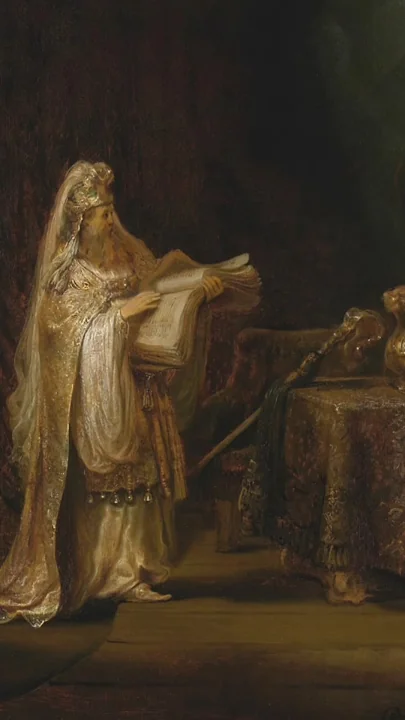
Crucially, the authentication process involved collaboration with leading conservators. Petria Noble, the chief restorer at the Rijksmuseum in Amsterdam, played a key role in the technical examinations, lending her world-class expertise to the project. This interdisciplinary approach, combining art historical knowledge with scientific analysis, has become indispensable in the modern art world, especially since the passing of renowned Rembrandt expert Professor Ernst van de Wetering in 2021. Without his near-infallible judgment, institutions like Sotheby's now lean heavily on comprehensive technical data and their own robust internal research teams. This systematic approach ensures that any newly found Rembrandt undergoes the most thorough scrutiny imaginable. For another example of such scientific breakthrough in authentication, consider the Rijksmuseum's own recent confirmation of a significant Rembrandt piece: Rijksmuseum's Breakthrough: 'Vision of Zacharias' Confirmed as Rembrandt, a discovery also reliant on cutting-edge scanning and stylistic analysis.
Practical Tip for Collectors: When considering any significant art acquisition, always demand transparent documentation of its provenance (ownership history) and, for older works, thorough technical analysis. Independent scientific reports from accredited laboratories can provide crucial verification beyond stylistic assessments alone.
The Thrill of Discovery in the Modern Art Market
Sotheby's unveiling of this uncovered Rembrandt masterpiece is poised to ignite a competitive season in the Old Masters market. This December 3rd, amidst Sotheby's Old Masters auction in London, the Titus portrait will take center stage. Yet, it's not the only Rembrandt-related event captivating the art world. Rival auction house Christie's is also contributing to the "Rembrandt fireworks," offering exquisite prints by the Dutch master, and New Rembrandts Emerge: Tracking Recent Masterpiece Discoveries & Auctions shows similar trends.
Notably, Christie's will also offer a vibrant animal drawing by Rembrandt in February 2026, consigned by American billionaire Thomas Kaplan, with proceeds benefiting wildcat conservation. And, in another recent revelation, Christie's experts unearthed a small, intimate portrait pair by Rembrandt from 1635 during a routine house inventory, adding to the exciting roster of recently authenticated works. Such discoveries underscore the dynamic and ever-evolving nature of the art market.
Despite the immense excitement surrounding the rediscovered Titus portrait, expectations are tempered regarding a record-breaking price. While undeniably a major Rembrandt, its late-period, looser brushwork – a characteristic many modern viewers might find surprisingly contemporary – may not command the same astronomical figures as his highly finished, earlier works or dramatic narrative scenes. The market often favors specific periods or subjects, and while powerful, a personal portrait, even by Rembrandt, occupies a different niche than a grand historical painting. Nevertheless, its unique history and powerful emotional content guarantee significant attention and a substantial sale price.
Insight for Enthusiasts: The value of an Old Master is influenced by many factors beyond just attribution. Condition, size, subject matter, period, provenance, and even its exhibition history all play a role. A late, introspective portrait, while artistically profound, might not fetch as much as a dazzling early commissioned portrait or a dramatic biblical scene that more directly showcases the artist's virtuosity to a broader audience.
Understanding Rembrandt's Legacy and the Future of Authentication
Rembrandt van Rijn's enduring appeal lies not only in his prodigious talent but also in the profound humanity he infused into every stroke. Each recently authenticated Rembrandt adds another dimension to our understanding of this complex genius. The rediscovery of the Titus portrait is a powerful reminder that even after centuries, the history of art is still being written, with hidden treasures awaiting their moment to shine.
This event also highlights the evolving landscape of art authentication. With the passing of legendary connoisseurs, the field increasingly relies on a synergy of traditional art historical expertise, scientific analysis, and meticulous archival research. This interdisciplinary approach ensures that future discoveries are met with the most rigorous verification possible, maintaining the integrity of art history.
The Long-Lost Rembrandt: Sotheby's Unveils a Century-Old Mystery is more than just an art sale; it's a cultural event. It offers a tangible link to the past, reminding us of the timeless beauty and emotional depth that a true master can achieve. As this powerful image of Titus prepares for its public reintroduction, it stands as a testament to Rembrandt's genius and the endless fascination with uncovering the secrets of the past.